When you're designing a
custom glass bottle with a metallic finish, you'll likely come across two main options: electroplating and spray coating. They both look great on the shelf, but they work in very different ways — and choosing the wrong one can cost you time, money, or brand perception. Let's walk through what each method actually involves, where they shine, and which one makes sense for your project.
What Is Electroplating, Really?
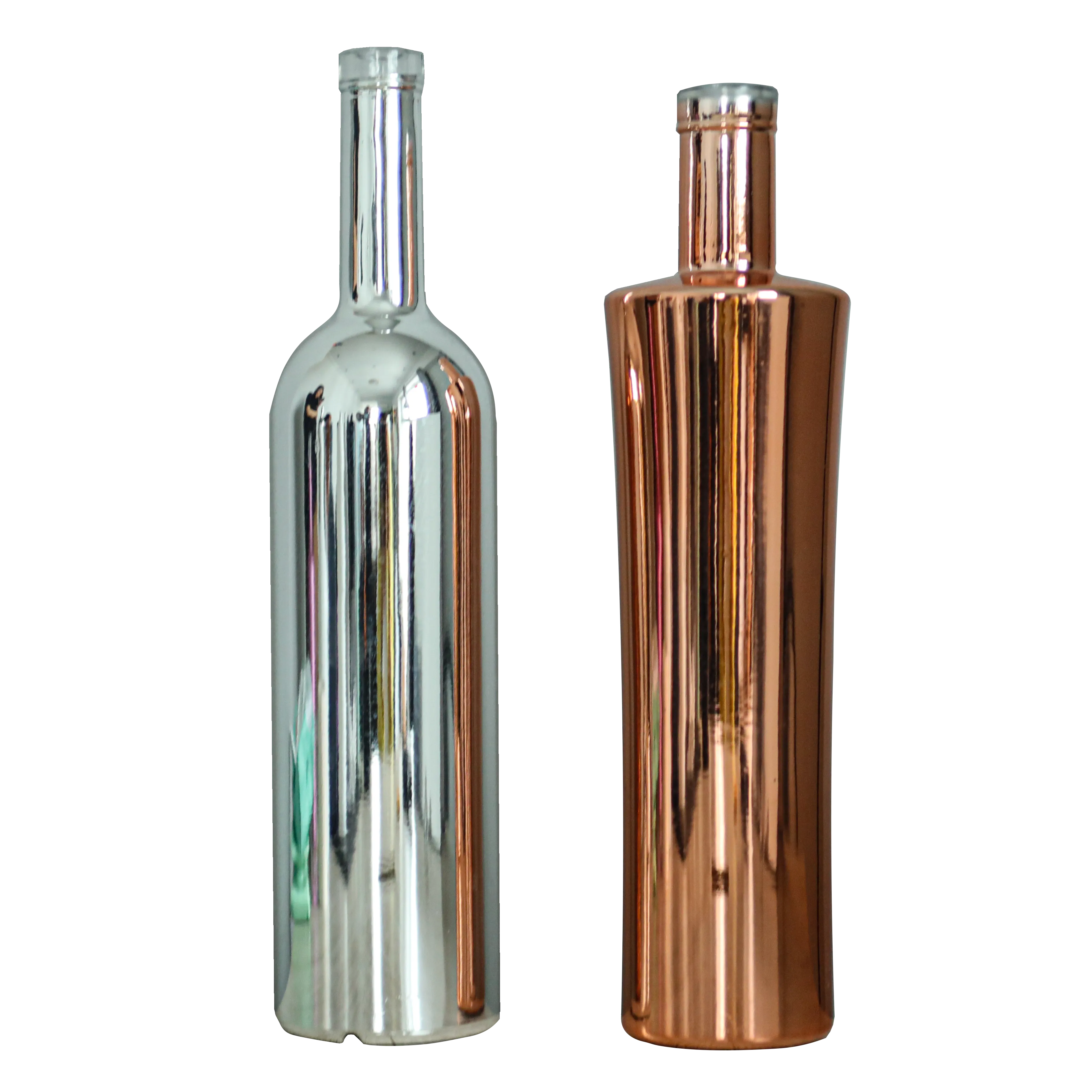
Here's the thing: true electroplating doesn't work on glass. Glass doesn't conduct electricity, so you can't just dip it in a plating bath the way you would with metal parts. What people in the packaging industry usually mean by "electroplating" on glass is actually vacuum metallization — a process where a thin layer of metal (most commonly aluminum) is deposited onto the glass surface inside a vacuum chamber.
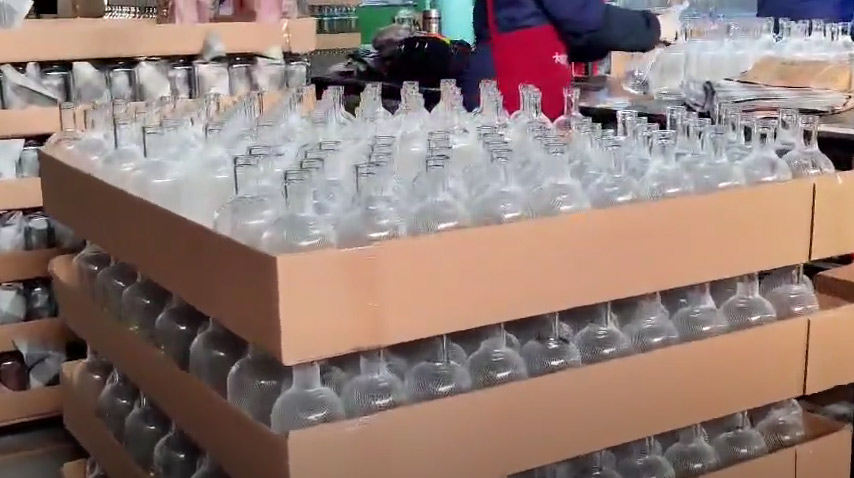
The process goes something like this. First, the glass bottle gets thoroughly cleaned to remove any oils or dust. Then a primer coat is sprayed on to help the metal layer stick. The bottle goes into a vacuum chamber where metal is heated until it evaporates and settles evenly across the surface. After that, a top coat is applied — this could be glossy, matte, or even anti-fingerprint — and everything gets baked at high temperature to lock it all in.
What you end up with is a finish that looks like solid metal. It's highly reflective, almost mirror-like, and it feels premium to the touch. The metal layer is also quite hard, so it resists scratches and wear better than most painted surfaces. Another bonus: that dense metal film does an excellent job of blocking light, which is a big deal if you're packaging something light-sensitive like spirits, essential oils, or certain cosmetics.
The downside? You're somewhat limited on colors. Chrome, gold, silver, rose gold, gunmetal, and black chrome are the standard options. And because the equipment and process control are more complex, the cost runs higher — this is squarely a premium finishing technique.
What About Spray Coating?
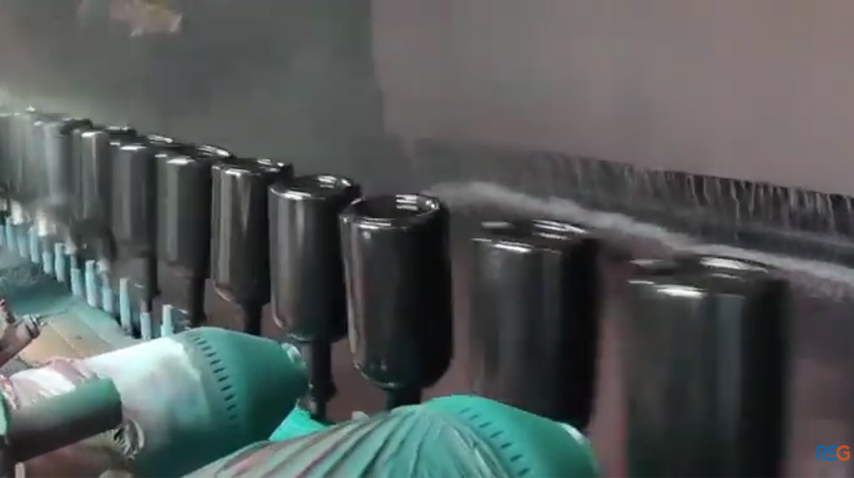
Spray coating is much more straightforward. The bottle gets cleaned and prepped, then liquid paint is applied using automated spray equipment. The bottle rotates on a fixture to make sure the coating goes on evenly, even around curves and shoulders. After spraying, it goes into a low-temperature oven to cure.
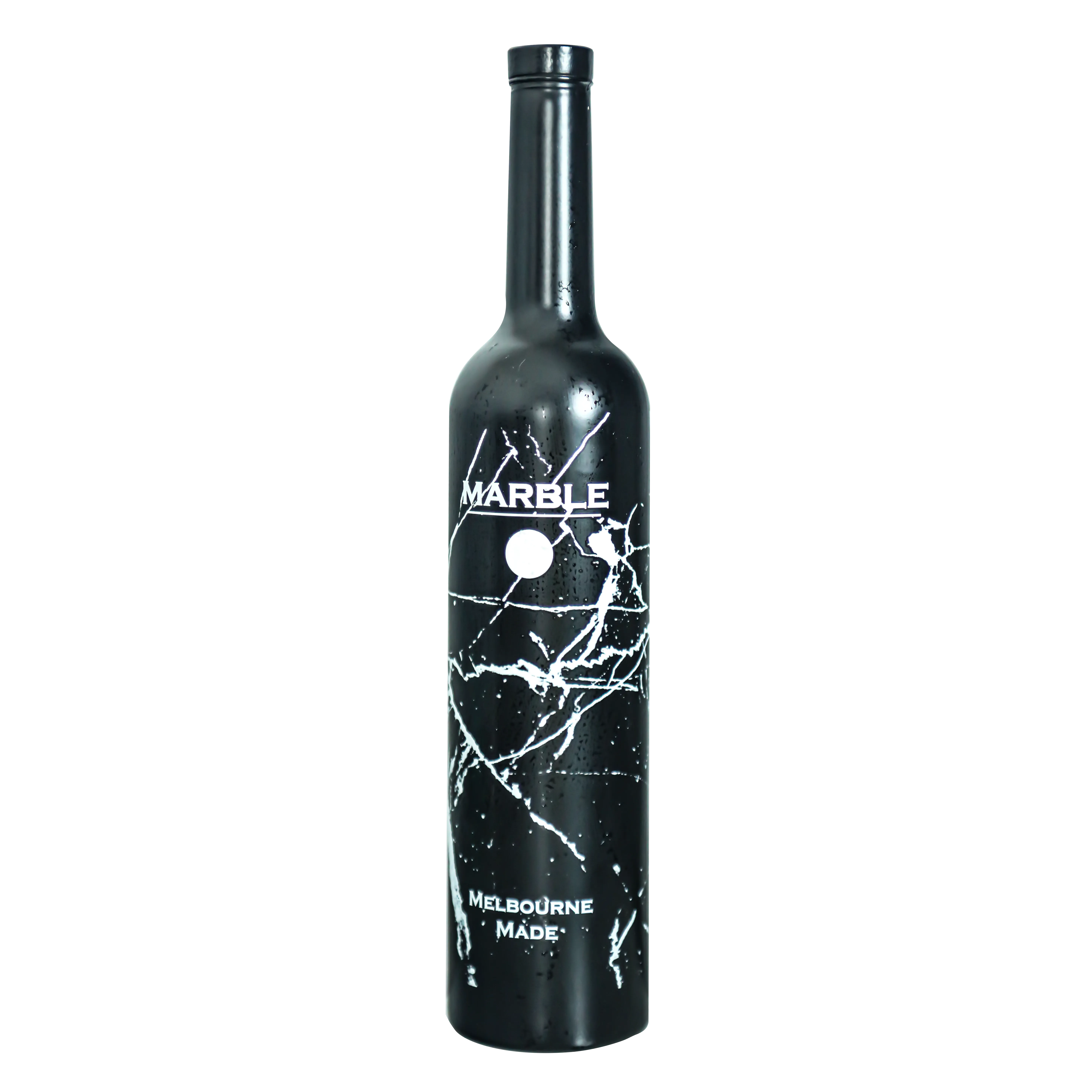
Where spray coating really wins is flexibility. You're not locked into a handful of metallic shades — you can match Pantone colors, create gradients, go pearlescent, or even layer different textures. Matte, glossy, satin, metallic, ceramic-like — it's all on the table. For brands that need their packaging to match exact brand colors or want something more playful and design-forward, spray coating is usually the better fit.
It's also more budget-friendly. The equipment is less specialized, the process is faster, and minimum order quantities tend to be lower. That makes it accessible for growing brands or product lines where you need to keep costs in check.
The trade-off is durability. Spray coatings can chip, peel, or scratch more easily than a metallized surface, especially if you're using lower-temperature paints. It's not a dealbreaker for most applications, but it's something to keep in mind if your bottles are going to take a beating in transit or sit on retail shelves for a long time.
How They Stack Up
If you're deciding between the two, here's what it really comes down to.
Look and feel: Electroplating gives you that cold, hard, mirror-like metal surface — unmistakably luxurious. Spray coating can mimic metallic effects, but it won't have that same depth of reflection. On the flip side, spray coating gives you colors and textures that electroplating simply can't touch.
Durability: Metallized finishes are tougher. They resist scratching and wear better across the board. Spray coatings hold up fine under normal conditions, but they're more vulnerable if the bottle gets knocked around.
Cost: Electroplating is the more expensive route, no question. The equipment is specialized, the process has more steps, and quality control is tighter. Spray coating is more economical and scales more easily.
Environmental impact: This is worth paying attention to, especially with tightening regulations in places like the EU. Electroplating involves chemicals and wastewater that need careful handling. Spray coating is generally cleaner, and water-based paint options are increasingly available.
Speed: Spray coating is faster to produce. If you're working against a tight launch timeline, that can be a deciding factor.
When Electroplating Makes Sense
Go with electroplating (or vacuum metallization) if your brand sits in the luxury or ultra-premium space. Think limited-edition spirits, high-end perfumes, or collector's items where packaging is part of the product's value. The mirror finish and real-metal feel signal quality in a way that's hard to replicate.
It's also the right call if durability or light protection matters. If your product is sensitive to UV or your bottles will see rough handling, the harder, denser metal layer is a practical advantage.
Just be prepared for the cost. This isn't a finish you use to cut corners.
When Spray Coating Is the Better Choice
Spray coating is your friend when color accuracy and design flexibility come first. If you need to match a specific brand Pantone, create a gradient effect, or combine metallic and non-metallic areas, spray coating is the only way to get there.
It's also the smarter choice for budget-conscious projects, faster timelines, and brands with sustainability priorities. The process is simpler, the environmental footprint is smaller, and you have far more creative room to experiment.
Can You Combine Both?
Actually, yes — and a lot of premium brands do exactly that. You might see a bottle with an electroplated cap sitting on a spray-coated body, creating contrast between reflective metal and matte color. Or partial metallization with masked areas that leave parts of the glass transparent or frosted. These hybrid approaches let you get some of the premium feel of electroplating without paying for full coverage.
The Bottom Line
There's no universal "best" option here. It depends on what you're trying to achieve.
If you want maximum prestige, durability, and light protection — and your budget can handle it — electroplating is worth the investment. If you need color flexibility, faster production, and a lower price point, spray coating is the practical choice.
Before you commit, always get physical samples. Photos don't tell the whole story. You need to see how the finish looks under real lighting, how it feels in your hand, and how it holds up to a scratch test. What looks perfect in a render might not feel right when you're holding the actual bottle.
Choose the finish that serves your product, your brand, and your customer — not just the one that looks best on paper.
Why RSG Glass?
If you're looking for a partner that can actually deliver on both electroplating and spray coating — and help you figure out which one fits your project — RSG Glass is worth talking to.
They've been in the
custom glass bottle business long enough to know that a great finish isn't just about the technique; it's about understanding your brand, your timeline, and your budget. Whether you need the mirror-like luxury of vacuum metallization or the color freedom of spray coating, their team can walk you through the options without pushing you toward the most expensive one.
RSG Glass handles everything from design consultation to prototyping to full-scale production, so you're not bouncing between suppliers. They also understand the regulatory side — sustainability, food safety, and export compliance — which matters more than ever if you're selling into markets like the EU or North America.
What stands out is their willingness to work with you on the details. Bottle shape, neck finish, closure compatibility, label adhesion, shipping durability — these things affect how your finish performs in the real world, and
RSG Glass factors them in from the start instead of treating them as afterthoughts.
If you're at the stage where you need samples, quotes, or just a straight answer on whether electroplating or spray coating makes sense for your next bottle, reach out to them. A good supplier doesn't just execute your spec — they help you refine it.
Need help deciding between electroplating and spray coating for your next glass bottle project? Start with the finish that fits your brand, then find a partner who can make it happen reliably. RSG Glass is a solid place to begin that conversation.
 English
 français
 Deutsch
 Español
 italiano
 русский
 português
 tiếng việt
 Türkçe
 Polska
 Indonesia